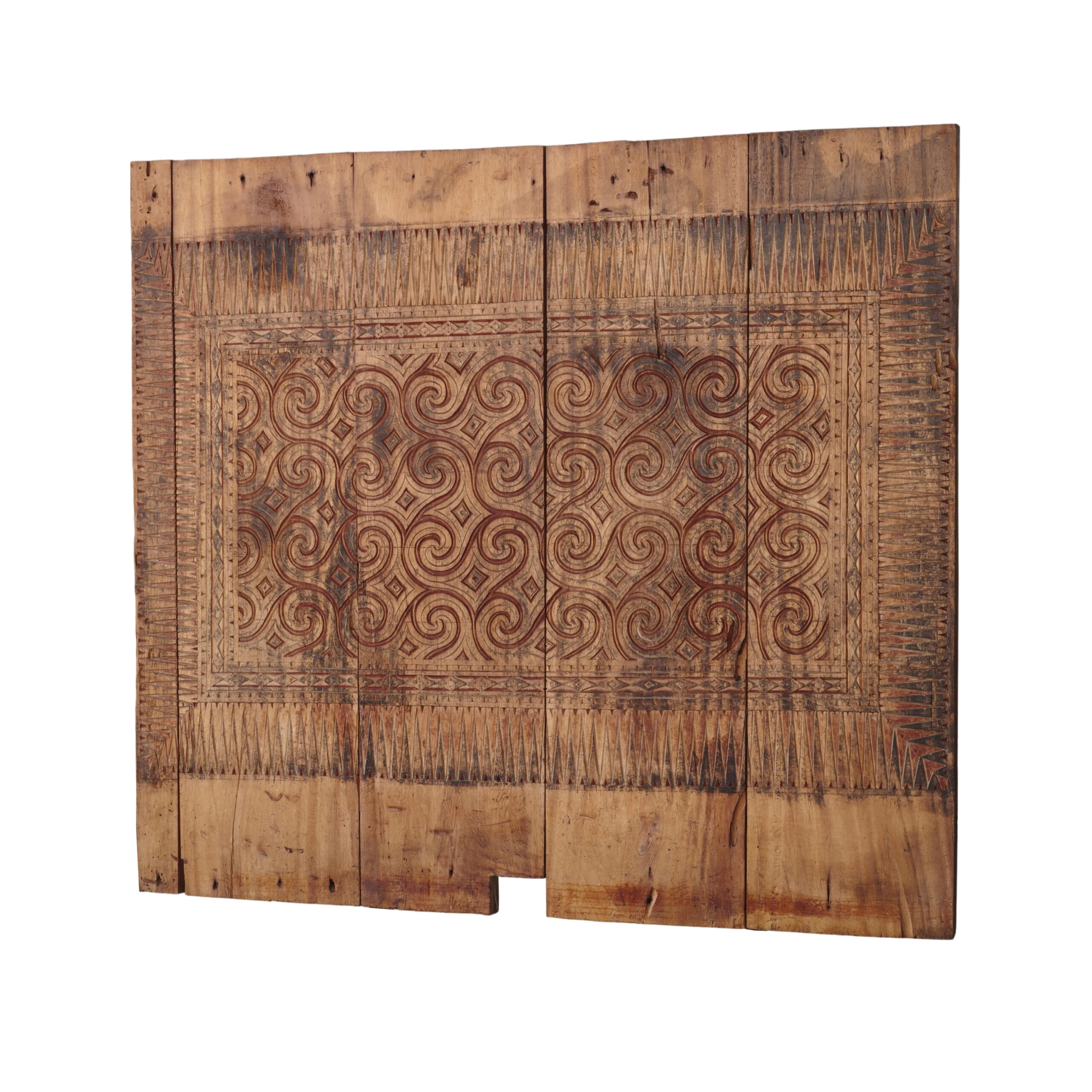
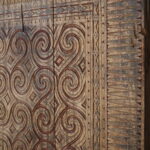
Ancestral House Panel I
Hand-carved wood
164 W x 145 H x 3.5 D cm
Indonesia – Sulawesi
Private Collection
On the Work
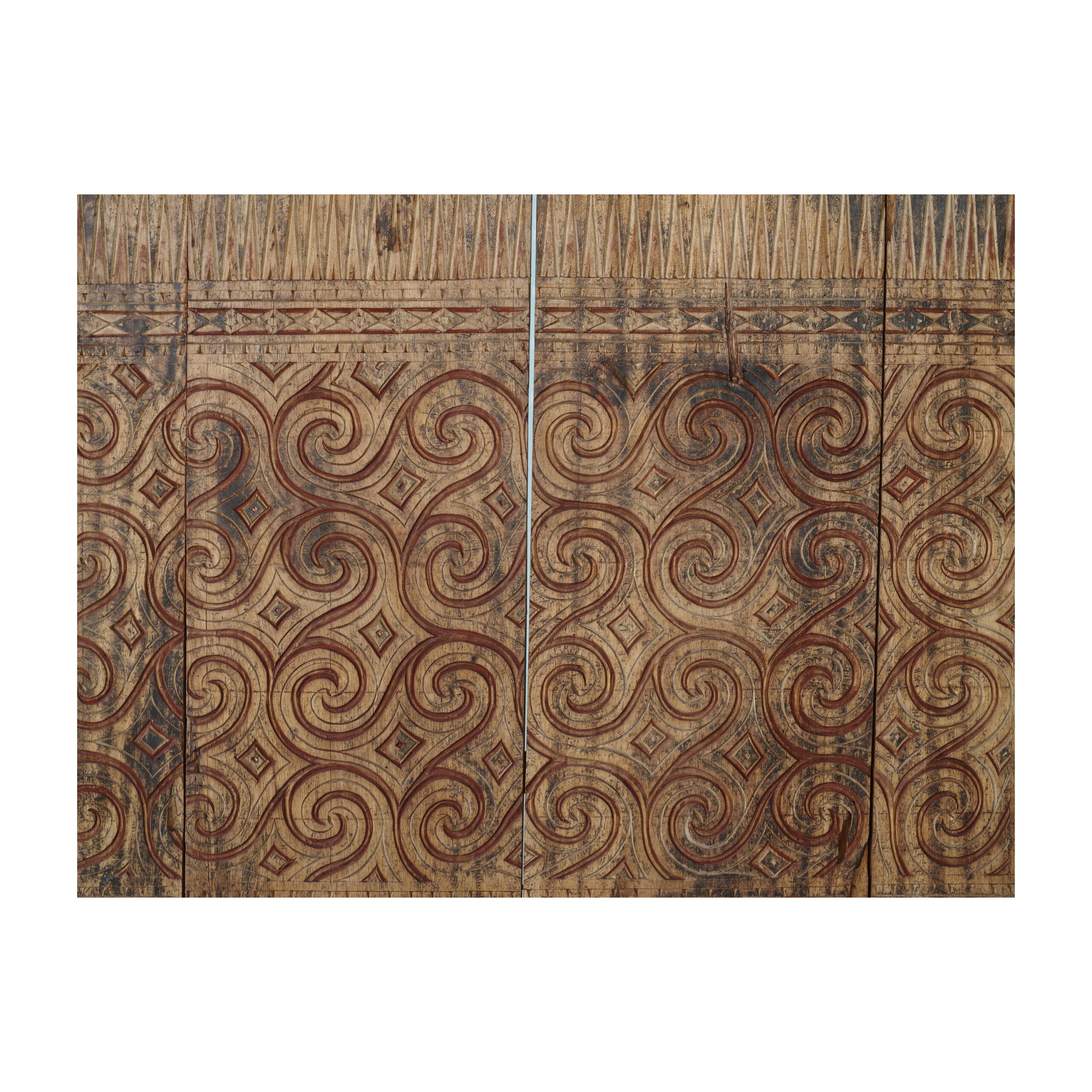
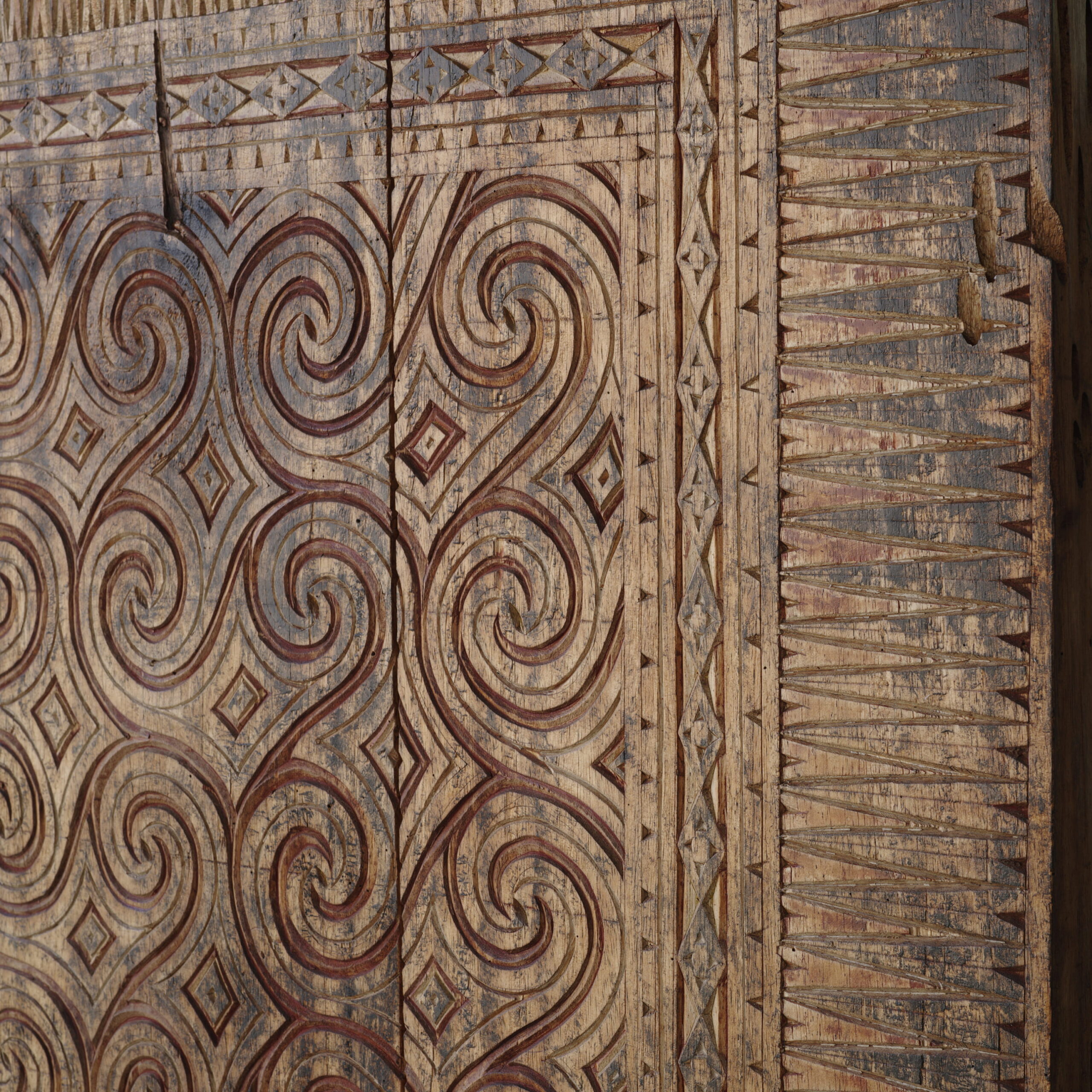
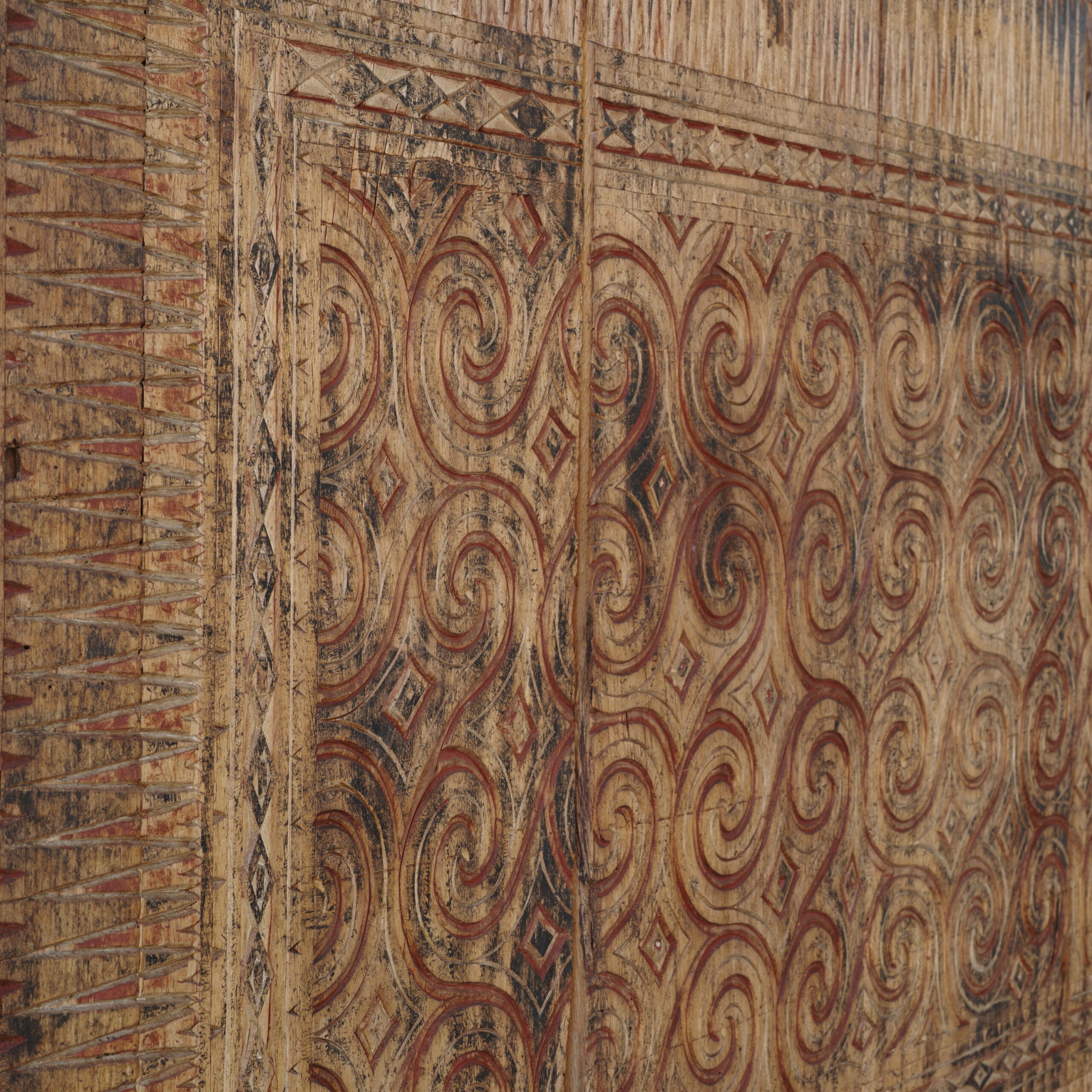
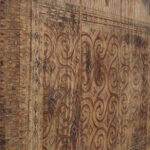
These four connected panels are covered edge to edge in dense, interlocking spiral carving; the pattern is bordered on all sides by a narrow diamond-lozenge band and a fringed strip. Unlike figurative Toraja panels carrying rooster or buffalo motifs, this piece belongs to the purely geometric strand of Pa’ssura, where repeating spirals and lozenges carry their own inherited meaning within Toraja visual language, traditionally finished in red, black, yellow and white pigments drawn from soot, lime, and coloured earth.
For price and additional information, Request Expert Advice.
Toraja People
Their carved and painted walls serve as a written language for a people whose own language has never been written.
The Toraja are an ethnic group native to the mountainous Tana Toraja region of South Sulawesi, Indonesia, historically shaped by generations of relative isolation before wider contact with the outside world began under Dutch influence in the early twentieth century. Their cultural and spiritual life centers on the Tongkonan, the ancestral house that stands on wooden piles beneath a sweeping, saddle-shaped roof and functions as the origin point of family lineage, ritual, and kinship. Toraja carvers decorate the exterior walls and gables of the Tongkonan with Pa’ssura, an intricate visual language of geometric and figurative motifs, each carrying its own inherited meaning, rendered in red, black, yellow and white pigments drawn from soot, lime, and coloured earth, and traditionally strengthened with palm wine. Passed down through generations of carvers, Pa’ssura remains one of the most distinctive wood-carving traditions in Southeast Asia.